Optimizing building energy performance has become a strategic priority. Air conditioning, heating, and ventilation systems (HVAC) consume a significant portion of electricity .Inefficient regulation leads to high costs and premature equipment wear. With rising energy costs and increasing pressure on power grids, supervision systems must evolve. This article shows an example of how PcVue transforms traditional supervision into an intelligent, decision-oriented comsumption control tool through the integration of artificial intelligence (AI) and machine learning, enabling companies to reduce consumption, improve equipment performance, and make informed operational decisions.

Intelligent control for chiller energy optimization
As an example, consider a building equipped with several rooftop cooling units responsible for maintaining indoor temperature. The system load depends on multiple factors: weather conditions, occupancy levels, maintenance periods, and the intrinsic efficiency of the equipment.
Contextual Data Integrated by PcVue
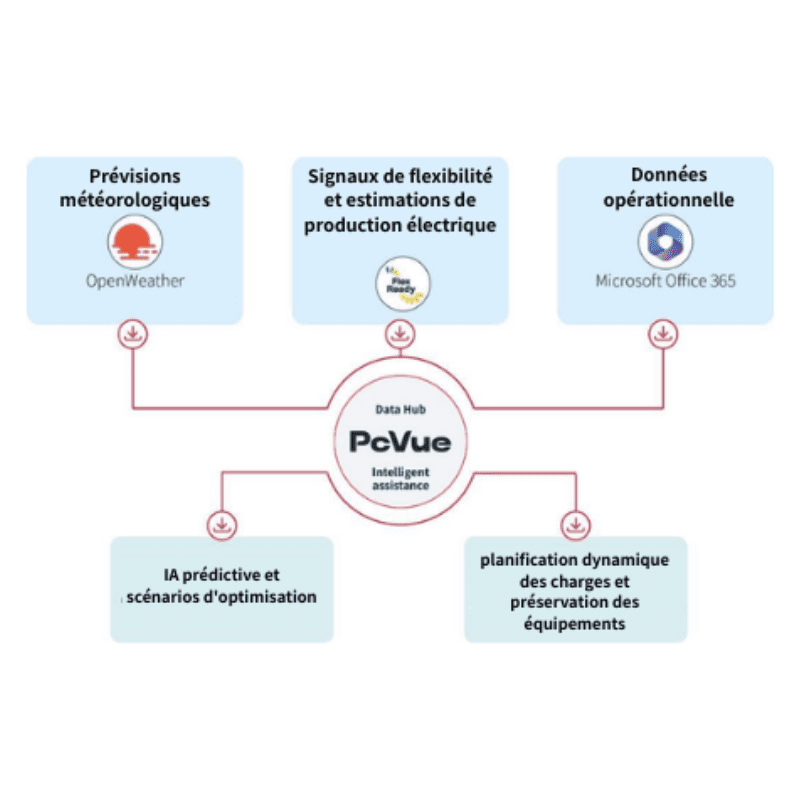
Thanks to its open connectors and data acquisition drivers, PcVue enhances supervision with essential external and operational data, for example:
- – Weather forecasts (e.g., OpenWeather)
- – Flexibility signals and electricity production estimates (via FlexReady API)
- – Operator-entered data (room occupancy, usage constraints, scheduled maintenance)
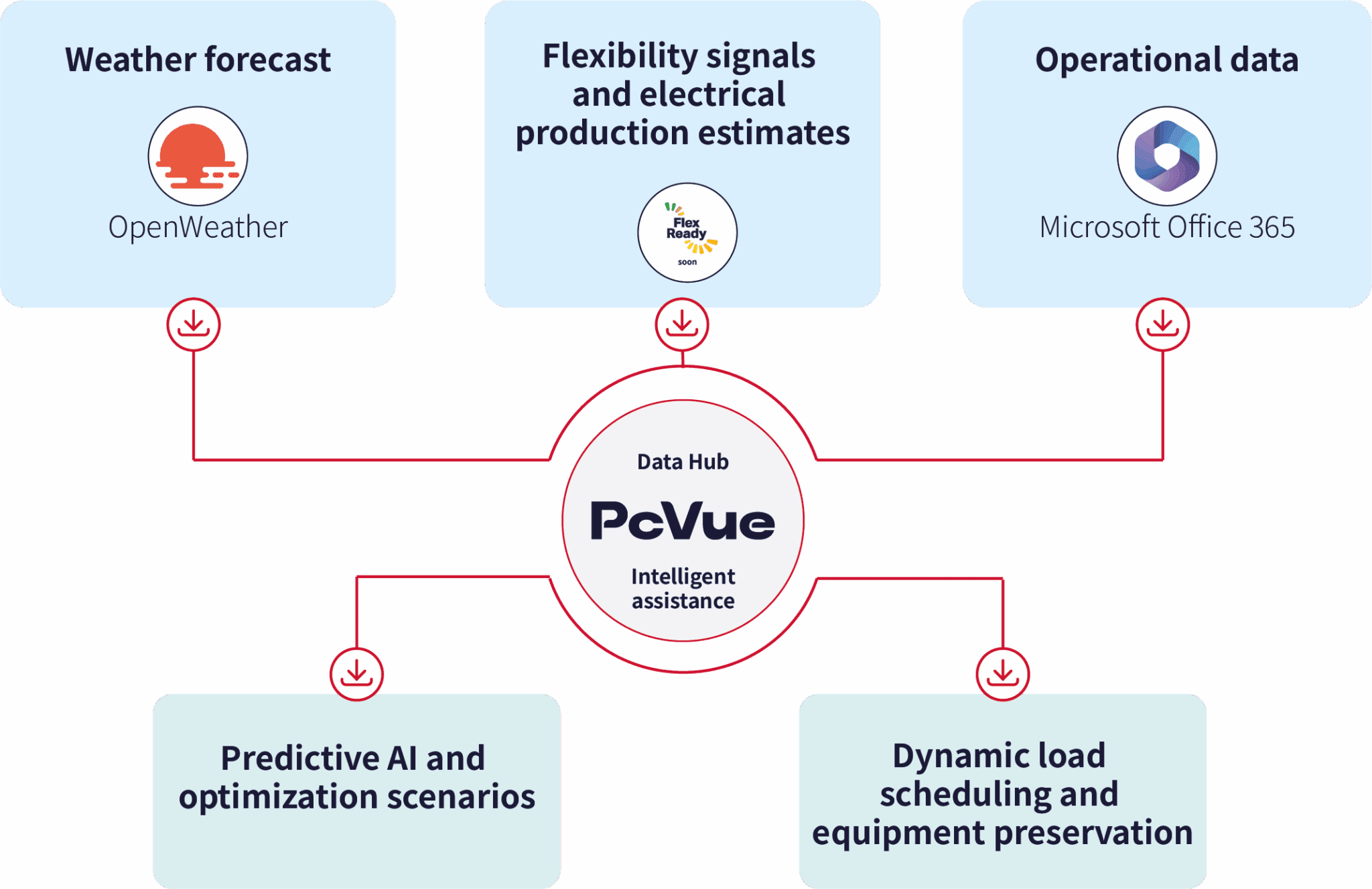
This integration allows for a shift from reactive management to proactive supervision, capable of predicting energy needs and optimizing system performance.
Classic PID Control: Reactive Supervision
Traditional PID control systems rely solely on the real-time deviation between the setpoint and the process variable. They do not incorporate a predictive model of the system, nor do they anticipate load variations. Chillers are activated or deactivated when a threshold is reached.
Although robust, this approach remains strictly reactive. It does not account for equipment inertia or future load evolution, leading to direct consequences such as:
Extended high-load operation
- – Frequent start/stop cycles
- – Degradation of the Coefficient of Performance (COP)
- – Accelerated mechanical wear
- – Increased energy consumption and maintenance costs

Predictive AI and Optimization Scenarios: Performance-Driven Management
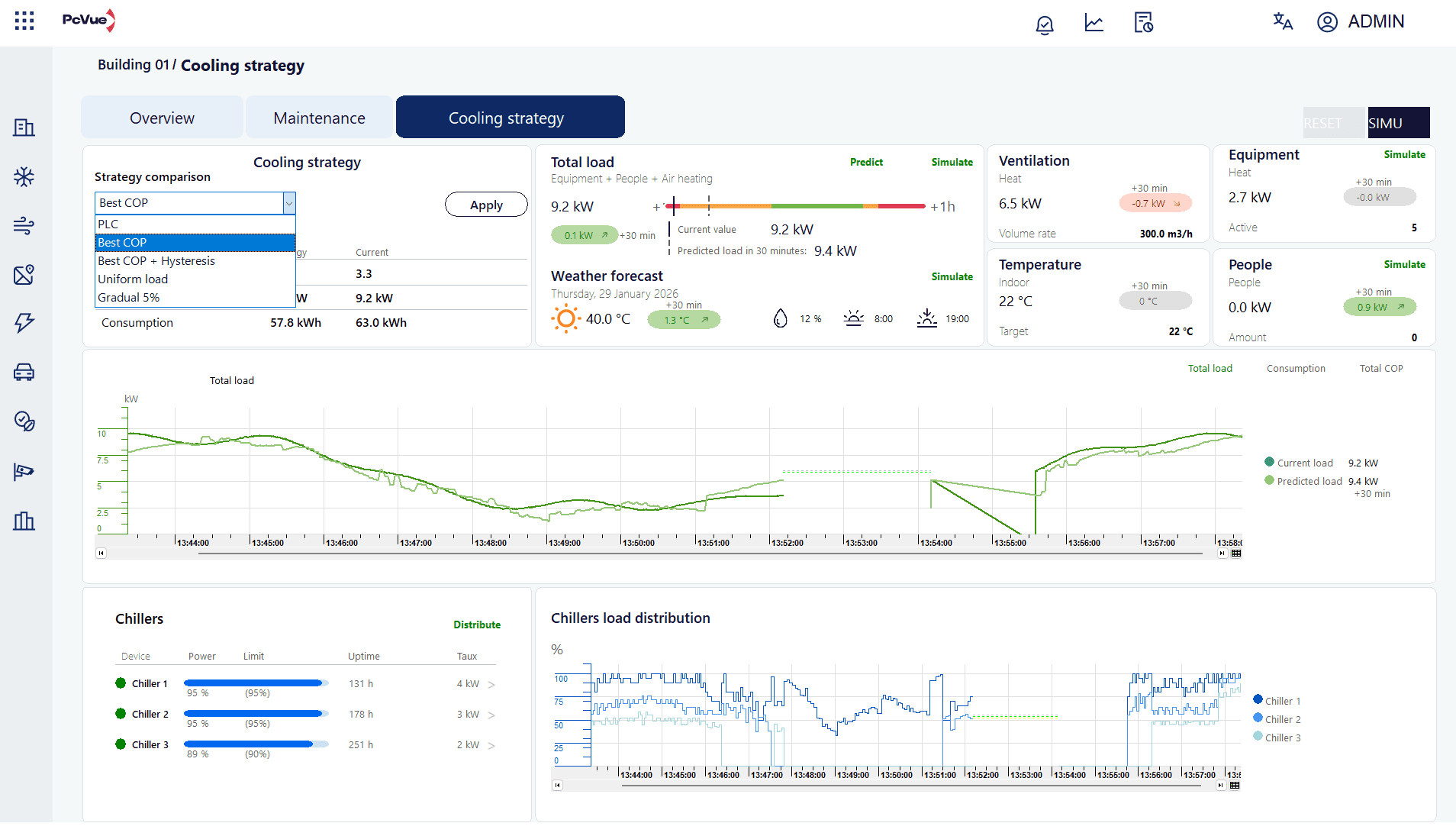
With artificial intelligence, PcVue introduces a proactive, performance-oriented approach. Machine learning algorithms use historical data, forecasts, and operational context to estimate future loads and generate multiple optimization scenarios.
Objectives of Optimization Scenarios
Each scenario aims to:
- – Distribute load evenly over time
- – Anticipate activation and shutdown of cooling units
- – Optimize overall COP
- – Reduce high-load operating phases
- – Minimize unnecessary cycling and equipment stress
Scenario Visualization for Operators
Operators can visualize the impact of each scenario, comparing effects on:
- – Energy consumption
- – System stability
- – Equipment runtime
- – Associated costs
They can then select the scenario that best aligns with operational priorities, balancing performance, efficiency, and sustainability.
Dynamic Load Scheduling and Equipment Preservation
PcVue offers a dynamic load scheduling tool, providing a forward-looking view of the building’s energy status.
Components of Dynamic Load Scheduling
The schedule incorporates:
- – Load forecasts
- – Operational constraints
- – Occupancy and maintenance periods
Benefits for Equipment
By promoting a more consistent and evenly distributed operation of the chillers, this approach enables optimal use of the equipment.
Optimizing load distribution helps:
- – Reduce premature wear
- – Extend chiller service life
- – Lower corrective and preventive maintenance costs with the help of EmVue
Tangible and Sustainable Benefits
PcVue with AI delivers measurable, long-term advantages:
- – Improved COP and lower energy consumption
- – Load smoothing and peak limitation
- – Simplified demand response during critical periods
- – Reduced equipment wear and maintenance costs
- – Intelligent energy management focused on performance and sustainability
With the integration of AI, PcVue goes beyond traditional supervision by offering predictive control for energy flexibility and building performance.